Saturday, September 24, 2011

BioWare announces launch date for Star Wars: The Old Republic

BioWare and LucasArts are pleased to announce that Star Wars™: The Old Republic™ will launch on December 20, 2011 in North America and on December 22, 2011 in the European Launch Territories! The announcement was first made by BioWare co-founders Dr. Ray Muzyka and Dr. Greg Zeschuk during their keynote address at the 2011 Eurogamer Expo in London, England. Speaking to a packed room of press and fans alike, Dr. Muzyka acknowledged the weight of the moment and the patience of the fans.
“This is an incredible moment for everyone at BioWare and our partners at LucasArts who have dedicated their lives to build this extraordinary game. We appreciate the patience from the millions of fans who have been waiting for the game’s release.”
Each copy of Star Wars: The Old Republic will come with 30 days of subscription time, after which you have the option to continue playing with one of the following monthly subscription fees:
  • 1 Month Subscription: $14.99 (£8.99/€12.99)
  • 3 Month Subscription: $13.99 per month (one-time charge of $41.97/£25.17/€35.97)
  • 6 Month Subscription: $12.99 per month (one-time charge of $77.94/£46.14/€65.94)
Those who have pre-ordered the game and entered their pre-order code on StarWarsTheOldRepublic.com are eligible for Early Game Access. If you haven’t yet reserved your copy of the game, be sure to visit our Pre-Order page and secure your place in the Old Republic now!

We want to thank you for your continued passion, dedication and support. Though one part of this incredible journey is coming to an end, we are confident that you all share our excitement for this new beginning. Be sure to check back to StarWarsTheOldRepublic.com as well as our Twitter and Facebook pages for all the latest news and updates on Star Wars: The Old Republic.

Friday, September 23, 2011

Companion Characters Update – Part 1

From Minsc and Boo to Urdnot Wrex, companion characters play an integral role in all BioWare stories. The same is true for Star Wars™. From Chewie to R2-D2, the heroes in the movies are often accompanied by a trusted partner.

Star Wars™: The Old Republic™ is no different. Each character class unlocks unique companions throughout their storyline; companions that fight alongside players in battle against AI and other players in Open World PvP, aid in crafting and non-combat missions through Crew Skills, and provide commentary on environments and engage in conversations.

As you advance your story in Star Wars: The Old Republic, you build relationships with your companion characters based on the decisions you make throughout the game. How you treat each companion and how you act when they are in your presence determines how your relationship with them evolves. The writing team has done a fantastic job of bringing these companions to life with compelling stories and backgrounds. They add an emotional layer to the experience in the same way that such memorable characters as Bastila Shan and HK-47 did in Star Wars®: Knights of the Old Republic®.

From a combat and systems perspective, though, which is what my team is tasked with, bringing BioWare-style companion characters into a massively multiplayer setting is a daunting task with many hurdles:
  • How do you make each player’s companions unique in a world where other people are experiencing the same story with the same companions?
  • How do you make companions a critical part of the player’s combat without stepping on the usefulness of other players?
  • How can you make a companion character that is easy to control for players who don’t want to micromanage abilities, while also offering complex options for players who enjoy that style of gameplay?
These are just some of the questions that needed to be answered to make the companion feature feel truly integrated with the game. We have been through several rounds of iteration and testing on companions to make sure we deliver the kind of experience you expect in a BioWare game. In making these changes, we believe we have also made the most advanced companions in any MMO to date.

In this, the first of two blogs, we’ll take you through some of the changes and improvements to companion characters. First we’ll focus on customization and companion classes. Next time, we’ll talk about the artificial intelligence (or AI) of companion characters, along with their role in a group.

Customization


Players should feel like their companion is unique. Since your companions have a full set of armor and weapon slots, you’ll see a lot of variety in their appearances over time as you equip them with new weapons and armor that you acquire throughout your journey. After months of testing and evaluating feedback, we decided that equipment customization alone wasn’t enough to create the visual contrast that our players expected. So we decided to incorporate an additional layer of personalization to the game.
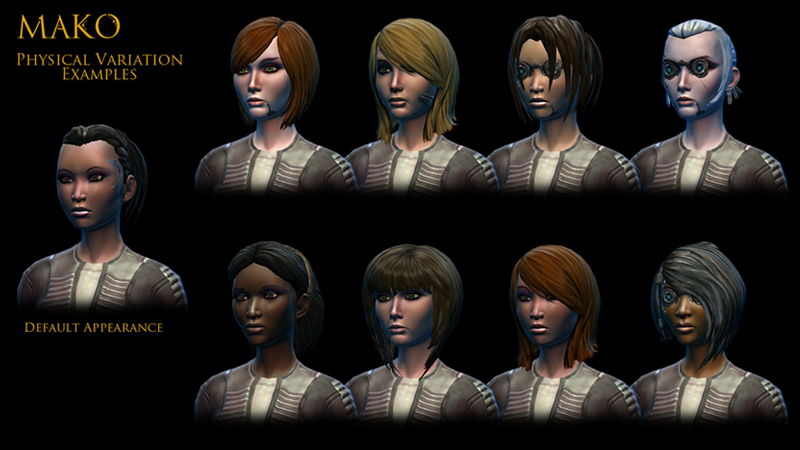
Players will be allowed to override the starting appearance of the companion, granting them different looks by modifying hair, skin tone, eyes and other previously unchangeable physical features.

 
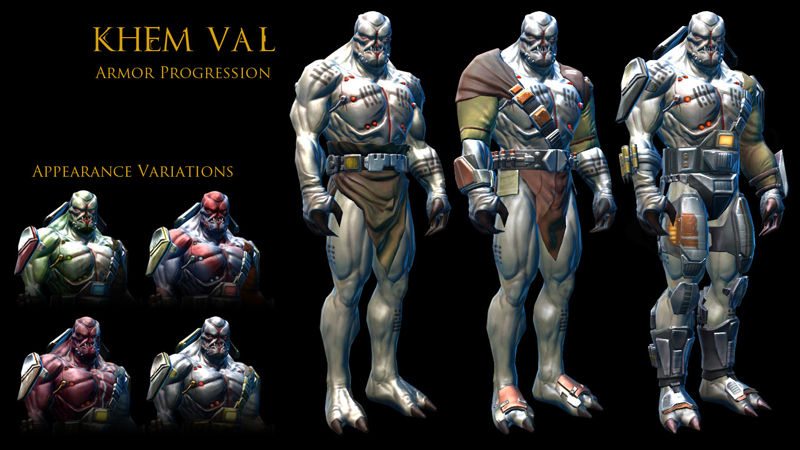
Humanoid companions get a tremendous amount of variety from armor sets alone, but certain alien or Droid companions may not, so giving the player control of their companion's appearance was especially important to us. One of the more frequent requests we heard from our testers involved giving additional attire for the more fashion-aware Inquisitors who were offended by Khem Val’s sparse clothing options.

 
Even small changes help your companion stand out in a crowd. When we first started testing, clicking on another player’s companion would show their full name. This resulted in screens full of identical nameplates. Now, companions for other players appear anonymous to the player so that rather than seeing a bunch of identical nameplates, you now see “[Player Name]’s Companion.” Of course, for your own companion, you’ll still see the correct name.

Companion Classes


Another critical component we’ve focused on relates to the combat abilities of the companion characters. When we first started testing The Old Republic, companion characters had one innate special ability as well as an ability that was given to them by the player. While players liked the mechanic, we felt it was too shallow and made the companions feel stale over time. We wanted to make sure that companions had the same depth of gameplay that BioWare fans have grown used to.

To that end we redesigned companions to give them each a specific class/role: ranged damage, melee damage, ranged tank, melee tank and support, each with a broad set of abilities that are unlocked as they level up alongside your character. Over time, your companion will feel more like a fully-featured character and less like a drone with one or two extra combat abilities.

Let’s take a deeper dive into one of the Smuggler’s companions, Corso Riggs, a heavily armored blaster specialist.

When first acquired around level 7, Corso already has the tools necessary to be an effective tank. His abilities include a Guard Stance that boosts his defensive capabilities and threat signature towards the enemy, a strong carbine attack that fires off a series of Charged Shots and a special distraction ability to taunt enemies into attacking him.

 
A while later, around level 25, Corso has picked up some new abilities that players can incorporate into his AI, including a powerful Fragmentation Grenade that can damage multiple targets, an EMP Blast that weakens nearby enemies and provides area threat generation, and a Grappling Line for pulling distant attackers in close.

 
By the time the player reaches the high 30s, Corso has a full bar of abilities at his disposal that allow him to fulfill the role of the traditional MMO tank in both solo and group play, along with a selection of special attacks for damage duty. This includes a mode that makes him an effective ranged damage dealer, and a Flare Gun that will draw the attention of all nearby enemies as well as new shields and support abilities to aid the player in tough fights.

 
Just as Corso gets the tools necessary to be both an effective tank and damage dealer, your other companions will get the tools needed to make them effective in multiple situations.

Healing/Support focused companions get a suite of medical abilities like Field Dress and Kolto Pack to keep their allies alive and fighting. They also unlock control abilities, such as Carbonized Stream, which requires the companion to focus entirely on keeping the enemy locked down and out of the fight. And, of course, they also get some attacks that can contribute to the fight when healing isn’t necessary.

Ranged damage companions can take one of two stances; a Sniper Mode that emphasizes their gun attacks and makes them deadly one-on-one combatants, or an Assault Mode that enables powerful explosive attacks more suited for in-group combat situations.

Melee damage companions focus on close range attacks; for some companions, this means a Lightsaber, vibroblade, or electrostaff. For others, this means Flamethrowers, Oil Slicks, and other forms of wrist-mounted firepower.

Melee tank companions, like their ranged counterparts, have multiple ways of drawing fire from enemies and are also given powerful close range attacks that allow them to function as both a tank and a damage dealer as necessary.

We believe with these recent updates to companion abilities, we add another dimension to companion characters, really making them come alive in combat as well as conversations. In my next blog, I’ll explain how companion AI works, as well as giving more details on their roles in a group.

William Wallace
Senior Game Designer

BioWare talks SWTOR testing, post-release content

[As BioWare Austin prepares to release Star Wars: The Old Republic, project lead James Ohlen talks with Gamasutra about polishing up the MMORPG in these final pre-launch months, and the difficulty in letting go of creative control.]

While no official release date has been set on paper, BioWare is hoping to have Star Wars: The Old Republic -- its first ever MMORPG -- to be available this holiday.

With the game entering its final months of production, and with BioWare Austin and its parent Electronic Arts counting so much on the game's success, project lead James Ohlen tells Gamasutra, "One of the secrets to making a 90 Metacritic game is you really have to continue to polish all the way to the end." He adds that "Most BioWare games aren't really fun at all until the last five or six months."

Ohlen goes into greater detail about what his team is doing in the home stretch, the post-launch plans, and how difficult it is to let go of creative control when your project gets too big to handle.

This is a pretty ambitious MMO, there are a lot of moving parts. At this point in the development process, what are you focusing on?

Polishing game systems, tutorials, and teaching new players how to play the game. So, we're introducing systems that will do that. We're also focusing a lot on making sure our tech's going to be stable, that we have a very stable launch.

The thing about a massively multiplayer game is that it's different from any other game out there, because you have this vast online community all over the world online at the same time, and you have to make sure there's no way for your game to be hacked. You have to have very strong security, your game has to stand up if you have hundreds of players in one zone at the same time. There's a lot of things that we've never had to worry about at BioWare before.

And the fact is, because of the hype around the game right now, our launch numbers are predicting something really huge, which means we have to be ready for the biggest online launch in history essentially, which has made it really tough. We've been running a lot of tests, just making sure we're going to stand up when we launch.

We're also focused on game balance for combat, for itemization, for the social systems. We've been running a lot of tests, we're getting a lot of feedback on the game. And when we get that feedback, we use it to make tweaks and changes. We're not making major changes now, we're just making changes that we can. Every BioWare game goes through this process, or any game in general.

One of the secrets to making a 90 Metacritic game is you really have to continue to polish all the way to the end. You have to do a targeted launch, because if you go too crazy with feedback and you change major systems, what happens is you don't have time for polishing. You have to choose where you're going to change according to feedback from players, both external and internal.

As far as polish, something that strikes me as particularly interesting about this project is that it's fully voice acted. Traditionally an MMO can iterate easily because they don't have to worry about going back in for a re-recording of dialogue since it's text only. Is this a challenge?

It's been something that we've had to be aware of, but we've been aware of it since back in 2006. We knew it was going to be something we had to worry about, and the big thing is, when you're doing game balancing for quests, it's really about the activities that you're doing. So, if you're told by the NPC "You have to assassinate this guy," we can change what happens in-between that and you getting to him.

If we get feedback that the current way the mission runs is not intuitive or not very fun, we can change how the mission goes. But the actual conversation at the beginning where you're told to kill him off? That doesn't have to change. So, most of the feedback we get is around the actual activity that you're sent to do.

Another aspect of MMOs that's interesting to development is the way that it is constantly expanding and changing. That strikes me as another pretty big challenge with all these voice actors. Is this something that's planned ahead of time? Like, that you're going to get all these same voice actors in the studio next month?

Obviously if we're successful, which I think we're going to be, for years we're going to be doing new content. We're going to have free content, and…I won't go into details on what we're going to do post-ship, but obviously we're going to continue to feed the content pipeline if we're going to keep players in the game. And so yeah, we've been thinking about that.

The most important actors for us to keep around include the player character voices, because you don't want your voice changed. But that's something we have to be prepared for, that is one of the challenges. We have sixteen different player character voices that are probably the ones that we're going to be bringing back over and over again.

Is this your first massively-multiplayer beta test that you've been a part of?

Well we're not really calling it…I guess it is kind of a closed beta. Yeah, it's the first time I've been involved in any kind of massively multiplayer testing.

Were there any kind of big surprises once you had people actually playing the game? It's a very different feedback process than just playtesting a single-player game.

The thing about it is, it's important to get people to test your game, but the beta tests are more for finding out if your technology's going to stand up, and finding some small tweaks and changes. But all the big changes that we've been making were planned from way before, because we've been playing the game ourselves. If we didn't figure this stuff out, we'd be terrible game designers. So, internally we figured out a lot of the problems early on.

But at the same time, it's good for fans to feel like they're having an impact, and sometimes they do. Sometimes they do point out information that is a little bit surprising, but nothing hugely surprising. There's been surprises on the project, but mostly they've come from us playtesting this stuff.

Have you found that the development process followed a traditional sort of BioWare plan? Or did you really have to adjust yourself?

It's very different. Mainly, most BioWare games that are new come together at the last like, four months or something like that. Usually they look like trainwrecks. When we're showing them to the producers or publishers, they're like oh my god, how is this game going to come together? And then it comes out, and it's a 90 Metacritic game. But this game hasn't been the same, it's actually been in really good shape and playable for a long time.

By necessity.

Yeah. And that's been a lot different for me. Most BioWare games aren't really fun at all until the last five or six months.

When you go back to the office now, as the project director, what are you doing?

There's a lot of different things. There's obviously the post-release stuff that I have to be working on, because all that stuff has to start much earlier in the process. I look at all the feedback that's coming in. I play the game a lot now. So one of my jobs is to kind of sift through all the feedback I'm getting, both from the internal team and external sources, and figure out what to do with that. So I like to make sure that I'm playing the game a ton so I'm not just taking someone's word for it that a part of a game needs fixing.

That's kind of a philosophy of BioWare. Even the two doctors, Ray [Muzyka] and Greg [Zeschuk, BioWare founders], they always play our games, and that allows them to… they've actually played the game, and they can say yeah, I agree that this is boring or that doesn't work or whatever. That's what I have to do as well, to make sure that I'm on top of the game. It's kind of a challenge because the game's hundreds of hours long and there's eight different classes and so many different activities.

One difference between RPGs and other types of games is that RPGs have so many different systems involved in them. If you think of a first-person shooter, those kinds of games are very streamlined. You have like one mechanic: you shoot things. But then in an RPG you have a lot more mechanics.

And then in an MMORPG like The Old Republic you have so many mechanics. You have your adventuring game, you have your war zone PVP game, you have your crafting game, you have the space game. You have the itemization game, the level-up game. You have the multiplayer social systems, the multiplayer dialogue… there's so many systems involved. So, it's a challenge to keep track of them all.

One of the things that I've learned personally is that I've had to become much more… on previous games that I've worked on, I was much more of a control freak.

I was going to ask! It seems like the BioWare philosophy is that everyone is on top of the game, but it seems like you have to spread yourself a lot more thin on an MMO and learn to delegate.

Yeah. I have to trust my lieutenants. I have senior designers underneath me, and basically my management style now is I give my guys freedom, as long as they feel that they're going the way I want them to go, then I don't get involved. Even if I don't totally agree with something. There's no way for any one person to be able to be controlling a project this size. And the fact is, there's elements of the projects that I'm not going to be as knowledgeable about.

For example, Gabe Amatangelo is the guy who heads up the warzones and our operations, our PVP, and he has a lot of experience with that from Warhammer. I don't have that experience, so I definitely give him a lot of freedom on that. Our lead writer, Daniel Erickson I've given a lot of freedom. He's a writer, I'm not.

Bethesda Denied Restraining Order Against Fallout MMO Co-Developer Masthead

A court this week denied Fallout owner Bethesda Softworks' bid for a temporary restraining order against Masthead, co-developer of the embattled Fallout MMO from Interplay.

It's just the latest development in an ongoing legal battle that has Bethesda trying to regain full and complete control of the Fallout intellectual property.

After acquiring the Fallout IP from Interplay in 2007, Bethesda licensed the rights to develop an MMO based on Fallout back to the company, under certain conditions, or else the agreement would be terminated.

Then in 2009, Bethesda sued Interplay for allegedly failing to hold up its end of agreements regarding the company's development of the Fallout MMO, also known as Project V13.

But within months a U.S. District Court judge had denied Bethesda's motion for a preliminary injunction against Interplay.

Bethesda then filed another suit against Interplay and Fallout Online developer Masthead Studios, noting that the company is developing a Fallout MMO, but under an agreement between the two companies, cannot use any assets from the established Fallout universe, such as characters, settings or storylines.

Interplay later called Bethesda's interpretation of the agreement "absurd," noting that Bethesda never objected to the game as it allegedly knew what was intended by Interplay under the agreement.

This week, U.S. District Judge, the Honorable John F. Walter, denied the temporary restraining order requested by Bethesda against Fallout MMO co-developer Masthead, even before Masthead offered up an opposition to Bethesda's request for a temporary restraining order.

"[Bethesda] has not demonstrated that it will be irreparably prejudiced if the requested ex parte
relief is not granted, or that it is without fault in creating the crisis that requires ex parte relief," he argued [via Milford & Associates].

"Indeed, [Bethesda] was aware as early as February 2011 that Masthead was potentially infringing its
copyrights... Yet, Plaintiff waited seven months to apply for ex parte relief."

He concluded, "The Court finds that Plaintiff unreasonably delayed in seeking relief, and that the emergency that allegedly justifies a [temporary restraining order] is self-created."

Star Wars: The Old Republic Updated Q&A - Companions

Companions, as you've probably heard, are computer-controlled characters that will join you in your adventures--not unlike the companions that have joined you in other BioWare games like Mass Effect and Dragon Age. Just like in those games, your companions will interact with you, pass judgment on your decisions, and even fall in love with you if you decide to romance them. Your character will eventually build up a stable of different companions but will be able to travel actively with only one at a time. However, the development team has recently fleshed out the way companions work to add lots of new options and abilities, such as customizing appearances and even gaining levels. Game director James Ohlen explains. 

GameSpot: We understand that companions in Star Wars: The Old Republic have been greatly fleshed out since the last time we played with them--players will even be able to customize their appearances? How much freedom will players have to mess around with how their companions look? Any chance a companion's appearance will change with your character's alignment between the light and dark sides? 

James Ohlen: Players are able to customize the appearance of their companions in two ways. Because companions are full characters with inventory slots, players can change the equipment their companions are wearing. You can give your tough-as-nails Mandalorian warrior companion some badass Mandalorian armor. Or you can put her in clothes reminiscent of Princess Leia's famous gold bikini. Players can also change the skin color, hair, and facial features of their companion characters. We wanted players to have more freedom than in any previous BioWare RPG when it came to companion customization. 

GS: We also understand there will be a new companion controls system that assigns an actual class to your companions. Tell us about how this system works and what it will add to the game. 

JO: Fans of BioWare games are used to their companions having almost as much depth as the main character. We felt it was important that we do the same thing in SW:TOR. Companions have a class and can also level up and gain a full suite of combat abilities. They have their own ability bar, just like the players do. Players can also modify the artificial intelligence of their companions' behavior on the fly. 

GS: So now, companions will gain levels and even unlock skills. How in-depth will companion advancement be--is it as in-depth as player character advancement? Will they be able to choose advanced professions?
JO: While players won't be able to choose advanced professions for their companions, companions will be unlocking new abilities as they gain levels. Some of the abilities will be completely unique to companion characters. For example, the Wookiee companion character has an ability that lets him toss enemies around like rag dolls--just like Chewbacca did in the movies. 

GS: Why was the decision made to flesh out companions and their development? Did part of the decision have to do with a need to more closely complement the skill set of individual characters, for instance? 

JO: We were originally a little gun shy about making the companions too complex. In a single-player BioWare RPG, players have the option to pause the game and micromanage their companions' actions. In SW:TOR, the game takes place in real time, all the time. In high-stress scenarios, such as war zones and operations, the added complexity of managing a companion would be too much for a lot of players. However, the AI for our companions turned out better than expected. Players who didn't want to micromanage their companions didn't have to. In addition, we actually removed companions from war zones and operations, as we felt these activities should be entirely controlled by players. So we decided to add a lot of the depth that we had removed early on in the design process back into the game. 

GS: We know that you don't have to manage your companions' actions all the time and can basically leave them on their own to pitch in with their standard attacks in battle. But we understand that part of the new companion content lets you get more specific in setting their behaviors. What kind of controls or artificial intelligence can you set for your sidekick? Can you give us some examples? 

JO: We knew that there was going to be a large group of players that didn't want to micromanage their companion. Since every player has to use a companion, it was important that we didn't force a gameplay style on those players. We added a system where players can customize the AI of their companions. You can decide exactly which abilities your companions will use and which they won't use. 

GS: Can you give us a general update on the game and its progress? What's being focused on in the beta at the moment? 

JO: We're getting really close. You can play the game from start to finish. You can play the end game content, including flashpoints and operations. All the core game systems are in. Right now, we're making some balance changes to the space game, to the itemization progression, and to the leveling curve. We're improving enemy AI across the game. We're polishing late-game quests. But mostly we're focused on bugs. We want the game to hit the high standards set by previous BioWare games, and that means providing our fans with a polished experience. 

GS: Finally, is there anything else you'd like to add about companions or about the game in general? 

JO: Companion characters are going to be a significant innovation to MMORPGs. All of the testing feedback we've received so far on these characters has been extremely positive. We didn't expect something so core to the BioWare experience to be such a wonderful surprise to MMORPG players. 

GS: Thanks, James.

Monday, September 19, 2011

Studio Insider: Combat Animation

Introduction


With each Studio Insider, members of the Star Wars™: The Old Republic™ development team take you behind the scenes to give you an inside look at the work that goes in to making the game. This week, Principal Lead Animator Mark How discusses the work that goes in to creating the animations for combat in Star Wars: The Old Republic.

Combat Animation in The Old Republic


Hi. My name is Mark How and I am the Principal Lead Animator at BioWare Austin. Many ideas have been dreamt up since the inception of this extraordinary game and the animation team has been hard at work since the very beginning. While we see each project as a challenge, we have a lot of fun imagining all sorts of unique, action-packed scenarios that can play out in The Old Republic. Of course, the main purpose of animation is to produce characters that adhere to the basic laws of physics, but good animation also ties into many other facets of game design. Today, I’ll tell you about our experiences and techniques that go in to our creating the animations that compliment the exciting and visceral combat in The Old Republic!

We start out like any other game that has big ideas for combat: at first we thought about the classic battle between Jedi and Sith. When you picture these powerful Force users meeting, you think of how they Force Leap into battle! You think of their Lightsabers clashing, and how they use the Force to push and pull each other around the battlefield. We wanted to be able to replicate this sense of action and exhilaration in the way we capture the combat animations. We wanted to show Force Lightning exploding from your fingertips and have your character show their raw mastery of the Force by hurling large objects at your enemies. We also had many ideas about ranged combat; about ducking behind cover and blasting your way through a pack of enemy troops. Knowing that many of you who will play the game are going to be playing as non-Force users, we wanted to capture that feeling as well.

Lightsaber Clashing


One of the most iconic images in the Star Wars™ universe is the Lightsaber. Making the Lightsaber come to life in The Old Republic requires a collection of all the correct elements falling into place at the same time through visual effects, sound design and animation. Our challenge was to make the iconic Lightsaber battles from the movies come to life within the design confines of an MMO. We worked closely with the combat programmers and designers to ensure that the combat visuals do not detract from the gameplay experience. A key aspect we learned early in development was that players do not enjoy having character control taken away from them because of an action or animation. Similarly, we realized that any action a player takes in the game needs to be visually represented in a way that is consistent with the player’s expectations. Combining these two things, it was particularly challenging to develop animations that allowed for visually appealing combat while still allowing the players complete control over their characters.

Once we knew what our rules were for combat, the programmers and animators were able to create a Lightsaber clashing system that could predict the volleys of weapons fire and other attacks being thrown at the player from all directions, and have the player dynamically react to ‘block’ these attacks. Not only that, but we were able to keep this system active while players were deflecting directed attacks, engaged in melee combat or even running. Players may not even realize all the factors that are coming into play to visually represent the combat experience, but we believe it’s critical for making the player really feel fully engaged in the fight. Without these dynamics, the players would wind up locked in certain animations when they go to engage in a “Stock strike” or “Project,” and then the combat would really be failing to capture the feel of Star Wars; it would give the player the impression that they are watching the action rather than taking part in it for themselves.

We’ve iterated on the mechanics for a long time, and I think the Lightsaber combat system that the programmers and animators ultimately devised has really gone beyond expectations. Even in a battle scene with multiple players and multiple targets, each Lightsaber wielder can be seen attacking opponents with varied tactics while deflecting, parrying or dodging the attacks of the other enemies. It gives the whole experience a really dynamic, visceral feel, making the player feel like they’re taking part in an intense battle where their character has the heroic qualities expected of a Star Wars icon.

Combat Cover


“How could Han Solo possibly compete directly with Darth Vader?”

This was one of the situations our designers found themselves thinking about when balancing the character classes. Though armed with many brilliant blaster attacks, tactical abilities and cheap tricks, one of the most challenging tasks for the entire team was in designing a cover system that was useful to the player while keeping them feeling like they were part of the action. Some might argue that you don’t even need a cover system in an MMO, but the benefits provided to the classes and the overall visual dynamic of the combat system is incredible. This all comes back to the expectation that the player has. If you were a Smuggler in the Star Wars universe and there was a crate available for you to roll behind to deflect enemy fire, wouldn't you want to do that? Of course you would. The cover element has provided a tactical way for the Smuggler and Imperial Agent classes to be competitive against their Force wielding and gadget-toting opponents. Deciding we were going to create a cover system was one thing; creating it was something else. It took many hours of research, play-acting and experimentation to nail down the animations for ducking into, rolling into, or just dodging into cover. As you can imagine, with the variety of places where these characters can take cover in the game, that created an additional layer of complexity which had to be addressed. In the end however, cover looks, feels and functions like the real thing, and we think it bring an entirely new dynamic to ranged combat in the MMO genre.

Here we see a breakdown of the Imperial Agent rolling into cover behind a barrier.


Once it was established that melee-based player characters wouldn’t be locked into doing certain animations, we wanted to make sure that ranged classes worked the same way. The unique challenge with the ranged classes was that we wanted them to always keep their blasters pointed at their target until they were damaged, downed, or until the player chose to manually change targets. This needed to be true while standing still as well as when the player was moving. In an MMO, players don’t usually stand still and fight mobs of static NPCs. Consider PVP: as smart as NPC AI can be, it cannot compare to the intelligence, skill and intuitive reactions of a real human player. This means that when two human players duel each other, they can adeptly circle one another and jump to get in and out of range. They can’t be stuck in long, static animations when they attack. We had to work closely with the programmers to devise an aiming system that could account for numerous gameplay possibilities. I think what we achieved allows players to play the way they want and does not lock them into a combat system that only obeys a limited set of rules. As pretty as it could look, who wants to play a game where you run and then have to stop each time you want to fire your blaster? "Not I," says the Smuggler.

For The Old Republic, we are committed to giving you a great combat experience through aesthetic movement, strong character and great design. These elements come together thanks to the efforts of many different departments that are all working hard and working together to reach a common goal. Our combat has unique concepts that set it apart from other MMOs and help deliver another BioWare-quality Star Wars™ experience that we hope fans will find incredibly enjoyable and will want to continue as they progress in their stories and create new experiences of their own.

We'll see you online!


Community Q&A

With each Studio Insider a member of the development team takes the time to answer some of the questions that are put forward by the community. The next Community Q&A will center on the many aspects of socialization in Star Wars: The Old Republic. If you have a burning question, ask us via our Forums or on Facebook. Make sure to get your questions in no later than September 30th if you want it to be considered for the next Community Q&A.

Today, Principal Lead PvP Designer Gabe Amatangelo answers a few of your questions about Player-vs-Player Combat in The Old Republic.

Q: How important is the PvP community to BioWare? – Kryptorchid

A: Very important. The Old Republic’s PvP developers are avid gamers and active, long-time members of the MMO PvP community. We hold preservation and growth of the The Old Republic PvP community near and dear to our hearts.

Q: Will there be any kind of arena system? If so, which brackets will it support? - Inquiescent

A: ‘Arena System’ has come to mean two different things depending on the context: Single Elimination PvP game mode and Ranking/Tournament Systems. Whether or not we add that game mode to The Old Republic’s current lineup (domination, assault and bombing run) is TBD. However, one of the top things on our list for post launch is a rated Warzone system where players can form teams, earn team ratings, earn individual ratings, as well as participate in tournaments, etc.


Q: Are there any plans for non-combat forms of PvP, such as Pazaak or Swoop Racing? - RizzoRatchet

A: We are considering, testing and/or developing several things like that. We’ll let you know as soon as we are sure about what we’re going to add.

Q: Will we see a “Criminal” or “Bounty” mechanic so that we can persistently hunt down and torment those who hinder our progression? – Gryffin

A: Haha. Nice way of phrasing ‘how do you guys plan to deal with griefers!’ We are currently testing and iterating on a system to ensure player progression cannot be blocked by griefers on a PvP server, while still allowing for the thrill of spontaneous open world PvP conflicts.

Q: Will there be safe zones on PvP servers outside of faction-specific planets? – Zepplin

A: There are very few, but some do exist. For example, the promenade on the neutral planet of Nar’Shadda is a sanctuary.

Q: What incentives will there be for players to focus on targets outside of the typical “gank the healer” strategy; and how will factors such as burst damage, crowd control and “PvP tanking” play a role in accomplishing this? – Marsobot

A: Winning will be the incentive. Attacking the healer will be the right decision sometimes, but not always. A key contributor in ensuring this is the tanks’ Guard and Taunt abilities. Guard will redirect half of the damage through the Tank’s mitigation and avoidance. A taunted target will deliver less damage to everyone but the tauntee. Players will be able to easily visualize which Tanks are guarding and taunting, who their targets are, and when damage is deflected through clear animations and effects. This adds to the dynamics of a skirmish as players of varying skill levels can easily react to and be on their toes about who the real targets of opportunity are and when. Additionally, Tanks will be recognized and rewarded for how much damage they deflect in this fashion on Warzone scoreboards.

We have a fairly large health pool to burst damage potential ratio. This allows for burst damage to be useful when the time is right, while not letting it dictate the outcome of all skirmishes.

And as far as crowd control goes, there is ‘Resolve.’ Every time a player is crowd controlled they build up Resolve, which is pictured as a bar over the characters head (below the health bar). Once a player’s Resolve Bar is full it changes colors and starts to decay over time, during this they are immune to crowd control. The visual element helps with PvP accessibility, and tuning the Resolve values allows us to achieve a fun tempo ensuring crowd control as its place but isn’t the end all be all of PvP.

Q: Since it has been clearly stated that there will not be dual specs for characters in the game, can you explain your philosophy behind the skill trees and how you are taking into account players that want to be able to play PvP and PvE content on the same character? - illumineart

A: Dual Speccing is something we want to add soon after launch. Also, features like Guard, PvP Taunt, Resolve, etc. work to narrow the gap between PvP and PvE specialized skills (i.e. a +Block skill would be helpful in both PvE and PvP).


Q: Are waiting queues cross-server and, if so, also cross-language? - Kisskill

A: No. We believe that fostering rivalries and memorable encounters with recognizable players are important in building a good PvP community on a server. We suspect cross-server queuing compromises these key tenets. Additionally, systems like bolster and same faction vs same faction Warzones (like Hutball) help matches pop frequently and regularly.

That being said we will be keeping a close eye on the communities and re-examine the system as necessary.

Q: Are there rewards for PvP, such as Titles, Badges, Grades, etc.? – Xenthor

A: Yes. Players will earn currency for PvP Gear, Valor Ranks, titles and other privileges through PvP accomplishments, such as winning Warzone matches, claiming Open World PvP objectives, finding hidden caches in PvP areas, etc.

Q: How will the Bolster system work? – Kelremar

A: If after a time the Warzone matchmaking system has not found a match of players of the same level range, then it will start up a ‘bolstered match’ where players of varying levels will have their stats bolstered to within 20% of each other. Therefore, player skill disparity withstanding, the lowest level player will be 80% as effective as the highest level player in the match.

Thanks for checking out this month’s Studio Insider. We hope you enjoyed taking a look at what goes into creating animations in The Old Republic, as well as our Q&A on PvP. We know you have a lot of questions, so we’ve opened new Community Q&A threads in the forums and on Facebook which center on the topic of socializing in The Old Republic. Post your questions before September 30th and they may get answered in our next Studio Insider!

Saturday, September 03, 2011

PWE confirms Star Trek Online going F2P this year

"So when Perfect World acquired Cryptic, one of the contribution from Perfect World to Cryptic is we can share our free-to-play experience with Cryptic. So I want to emphasize is that never we’ve done a free-to-play model game, so we’re going to launch this game in US and also in China, so we expect to run these type if free-to-play model game. We have a bigger potential in US and also in China. And also Star Trek Online, after the acquisition, in fact Cryptic is working on the free-to-play model for Star Trek Online. This is going to be launched by the end of this year as well. So I think free-to-play model we have a bigger potential in US market and also in China market. Thank you."

Entire interview here.

Free2Play Details and More!

On the morning of October 12th, 2011 Fallen Earth will go into its regularly scheduled maintenance. When it returns, the game will officially be transitioned to Free2Play. This means that all current and former accounts (that have been linked to a GamersFirst account) will be able to play for free!


*Finalized but still subject to balance tweaks. Veteran pricing on Commander Premium Subscription is intended to be discounted, details of which are coming soon.

Scavenger -

This is a free account, the default starting level for all new accounts. This is for those who are new to Fallen Earth, or returning players that aren't sure what to expect. You'll have access to 100% of the game content from level 1 to max level. The efficiency at which you advance is not quite comparable to subscribed players, there is a limit to how many hours per day you can spend crafting, and how many chips you can have (this is to limit gold farmer impact, and goes away if you ever subscribe or buy anything, which essentially just "validates" your account). You do receive Reward Points each month, which you can take straight to the Reward Points merchants and spend right away, or save up for something bigger. Your primary reasons to purchase a Premium subscription will be to maximize your rate of advancement, to
get unlimited crafting time, more character slots and reward points, and because you want to show support for Fallen Earth's continued development :)

Survivalist -

The entry level Premium Subscription, Survivalist, is directly analogous to the game current subscribers are playing in terms of Reward Points and rates of advancement (except for the addition of a 5% marketplace discount), but costs $9.99 -- $5.00 less than the current subscription. You probably want to go Survivalist if you're into playing Fallen Earth enough to want to remove the minor restrictions to which "Scavenger" accounts are subject, and don't mind playing at the current default advancement rates. Your biggest reason to upgrade is that you want to improve all of the aforementioned gain rates plus you want a bit more Reward Points to spend at the Reward Merchants (which isn't a bad idea, as we're adding more stuff to them all the time).

Wastelander -

This costs $14.99 -- the same as a current subscription -- and provides dramatic increases your harvesting and crafting speed, as well as the rates of gain of EXP, AP, Death Toll, and faction. You want to go with Wastelander if you're a current player who understands the game and wants to benefit from the efficiency increases this Premium subscription provides. If you're truly a solo player, this is all you need -- it comes with a 15% discount in the Marketplace and 300 Reward Points (versus the current 100 Reward Points you already get with a subscription). Note: If you have an existing subscription, it will transition to Wastelander without your having to do anything.

Commander -

The Commander Premium Subscription is what you'll want if you're someone whom others look up to as a leader. While it is in most respects similar to Wastelander, the key difference here is that this package includes the Commander aura, a stackable buff that increases salvaging speed, EXP, Random AP, Death Toll, and Faction gain rates for all players in the Commander's group. It also includes a massive 500 Reward Points. You probably want to go Commander if you have friends that you want to help out with your aura, and/or you plan on buying a lot of items from the Reward Shop (which includes marketplace items as well).